
How to Sell a Two-Family Home in Queens, NY: The Complete Guide (2026)
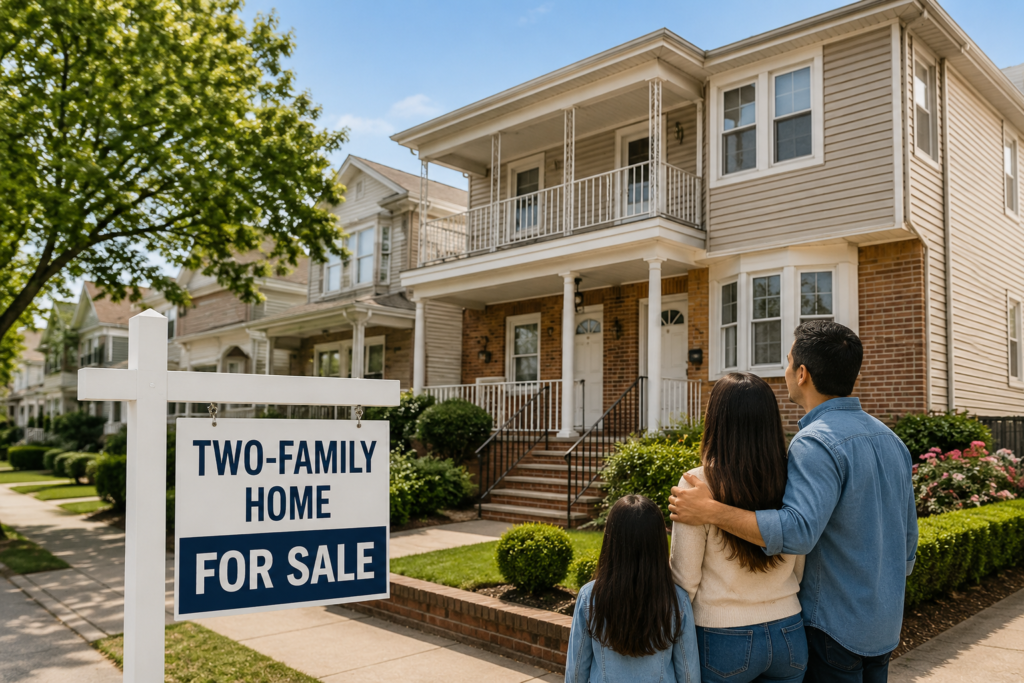
Selling a two-family home in Queens is not the same as selling a single-family house — and treating it that way is one of the most common and costly mistakes Queens homeowners make. The buyer pool is different. The valuation method is different. If the property has tenants, New York City law governs nearly every aspect of the transaction. And the cash offer calculation accounts for rental income in ways that dramatically change the numbers.
This guide covers everything specific to selling a two-family home in Queens — tenant rights, how investors calculate value, cap rate pricing, when a cash buyer makes more sense than listing on the MLS, and how to navigate occupied sales without legal exposure.
Legal note: This guide provides general information about New York City real estate law and the Queens two-family market. It is not legal advice. Consult a New York real estate attorney — ideally one familiar with NYC landlord-tenant law — before making decisions about your specific situation.
Table of Contents
- The Queens Two-Family Market in 2026
- How Investors Value a Two-Family Home
- Tenant Rights and NYC Law: What Every Seller Must Know
- Rent Stabilization and Its Impact on Your Sale
- Selling an Occupied Two-Family Home
- Cash Buyer vs. MLS Listing for a Two-Family Home
- The Real Net Proceeds Comparison
- Step-by-Step: How to Sell Your Queens Two-Family Home
- Frequently Asked Questions
The Queens Two-Family Market in 2026
Two-family homes are one of the defining features of Queens’ residential landscape. Approximately 25% of Queens’ residential inventory consists of one- and two-family homes where the owner occupies one unit and rents the other — or holds both as rental income properties. This ownership structure is deeply embedded in Queens’ communities, particularly in Jamaica, Hollis, St. Albans, South Ozone Park, Richmond Hill, Woodhaven, Flushing, and Ozone Park.
| Property Type | Median Sale Price (2026) | Notes |
|---|---|---|
| Single-family home | $830,000 | Queens median; varies significantly by neighborhood |
| Two-family home | $990,000 | +19% premium over single-family |
| 2–4 family building | $1,155,500 | Up 7% year-over-year |
The $990,000 median for two-family homes reflects both the physical value of the structure and the income-producing potential of the second unit. A two-family home generating $2,500 to $3,500 per month in rental income from the second unit is, in effect, a hybrid between a residence and an investment — and buyers value it accordingly.
Queens neighborhoods with highest two-family concentration: Jamaica, South Jamaica, Hollis, St. Albans, Queens Village, Ozone Park, South Ozone Park, Richmond Hill, Woodhaven, and Flushing. These areas have the most active cash buyer market for two-family properties.
How Investors Value a Two-Family Home in Queens
Investors and cash buyers use two distinct valuation methods for two-family homes — and understanding both gives you meaningful negotiating leverage.
Method 1: Comparable Sales (Price Per Square Foot)
The same approach used for single-family homes: what have comparable two-family homes in your neighborhood sold for recently? Cash buyers research MLS data and public records to establish an ARV (After Repair Value) — what the property would sell for once renovated to market standard. They then apply the standard investor formula:
ARV Formula: Maximum Offer = (ARV × 70%) − Estimated Repair Costs
Example: Two-family in Hollis with ARV of $920,000 and $60,000 in repairs → ($920,000 × 70%) − $60,000 = $584,000
Method 2: Income-Based Valuation (Cap Rate)
For properties with established rental income, experienced investors also calculate value based on net operating income (NOI) and cap rates. This is particularly relevant for Queens two-family homes with market-rate tenants.
| Variable | Example | Notes |
|---|---|---|
| Monthly gross rent (both units) | $5,800/month | Unit 1: $3,200 + Unit 2: $2,600 |
| Annual gross income | $69,600 | |
| Operating expenses (taxes, insurance, maintenance ~30%) | $20,880 | |
| Net Operating Income (NOI) | $48,720 | |
| Cap rate for Queens two-family (2026) | 5.0–6.5% | Varies by neighborhood |
| Income-based valuation | $749,500–$974,400 | NOI ÷ Cap Rate |
When rental income is strong and the property is in good condition, income-based valuation can actually produce a higher offer than the ARV formula — because the buyer is paying for a stabilized cash-flowing asset, not just a renovation project.
Your negotiating advantage: If your property has strong rental income at or near market rates, document it before contacting any buyer. Rent rolls, lease agreements, and bank statements showing consistent rent receipt directly support a higher income-based valuation — and give you concrete grounds to counter a low offer.
Tenant Rights and NYC Law: What Every Seller Must Know
This is where selling a Queens two-family home diverges most dramatically from selling a single-family property. New York City has some of the strongest tenant protections in the country, and they apply regardless of whether you are selling, renovating, or simply want the unit vacant.
Key NYC Tenant Protections That Affect Your Sale
Right to Notice Before Sale
New York City law does not require landlords to notify tenants that a property is being sold — but the sale does not terminate an active lease. A buyer takes title subject to all existing lease obligations. If a tenant has a lease through March 2027, the new owner is bound by that lease.
Month-to-Month Tenants: Notice Requirements
For tenants without a fixed-term lease (month-to-month), the notice required to vacate depends on how long they have lived in the unit:
| Length of Tenancy | Notice Required |
|---|---|
| Less than 1 year | 30 days |
| 1 year or more, less than 2 years | 60 days |
| 2 years or more | 90 days |
Critically: notice does not guarantee vacancy. If a tenant refuses to leave after proper notice, the landlord must pursue formal eviction through Housing Court — a process that in Queens typically takes 3 to 9 months.
Owner Move-In: A Limited Exception
If the buyer intends to personally occupy the unit (owner move-in), this can be grounds for non-renewal of a lease or termination of a month-to-month tenancy — but requires proper notice, applies specific legal procedures, and can still be contested by the tenant.
Harassment Prohibition
Any attempt to force a tenant out through illegal means — cutting off utilities, removing doors, refusing repairs, threats — constitutes tenant harassment under NYC law and can expose the seller (and potentially the buyer) to significant legal liability. Do not attempt to accelerate a tenant’s departure through any means other than the legal notice process.
Critical warning: Never accept a cash payment from a tenant (or offer one) to vacate without proper legal documentation of the agreement. “Cash for keys” arrangements are legal in New York but require a written agreement with specific language. Have an attorney draft or review any such agreement before money changes hands.
Rent Stabilization and Its Impact on Your Sale
Rent stabilization is one of the most misunderstood aspects of Queens two-family home sales. Here is what actually applies.
Does Rent Stabilization Apply to Two-Family Homes?
Generally, no. Rent stabilization in New York City primarily applies to buildings with six or more units. Most Queens two-family homes are exempt from rent stabilization — tenants pay market rate and the landlord can raise rent between leases or with proper notice for month-to-month tenants.
However, there are exceptions. If a two-family home was at any point registered with the Division of Housing and Community Renewal (DHCR) as a rent-stabilized unit — which can happen if the building was part of a tax abatement program — those units may carry stabilization obligations regardless of current unit count. Check with the DHCR or a housing attorney if you have any question about your property’s registration status.
How Rent Level Affects Sale Price
Even for market-rate properties, the current rent level matters significantly to buyers:
- Below-market rent: A tenant paying $1,800/month in a unit worth $2,800/month at current market rates reduces the income-based valuation and may lead to a lower offer. Buyers factor in the lost income during the time it takes to re-lease at market rate.
- At-market rent: Current leases at or near market rate support the strongest income-based valuation.
- Above-market rent: Rare, but short-term leases above market can create concerns about tenant stability and renewal risk for buyers.
Selling an Occupied Two-Family Home in Queens
Most Queens two-family homes are sold with at least one unit occupied. The question is not whether you can sell occupied — you can — but how you structure the sale to close successfully.
Option 1: Sell As-Is, Occupied, to a Cash Buyer
The most practical path for occupied two-family sales. Cash buyers who specialize in Queens multi-family properties purchase with tenants in place, with full knowledge of lease terms and tenant rights. They assume the landlord role at closing and manage the tenancy going forward. You receive your proceeds and have no further obligation to the tenants.
This is the path of least friction for sellers. No need to give notice, wait for vacancy, or navigate Housing Court. The cash buyer prices the offer accounting for the occupancy, and the deal closes on a timeline that works for both parties.
Option 2: Negotiate Voluntary Vacancy Before Listing
If one or both units are month-to-month and you have time, negotiating a cash-for-keys agreement with the tenant can increase the property’s appeal to financed buyers and potentially raise the sale price. A vacant unit allows the buyer’s lender to appraise based on market-rate potential rather than current below-market rent.
This approach takes time — typically 60 to 120 days minimum — and requires legal documentation. It makes sense only if you have the runway and the negotiation is straightforward.
Option 3: List With Active Tenants, Target Investor Buyers
Listing an occupied two-family on the MLS with tenants in place limits your buyer pool to investors and buyers comfortable with tenancy assumptions. Financed owner-occupant buyers who need a unit vacant for their mortgage approval will not be viable candidates. This approach can work but typically produces fewer offers and a longer timeline than a cash buyer transaction.
Cash Buyer vs. MLS Listing for a Two-Family Home
| Factor | Cash Buyer | MLS Listing |
|---|---|---|
| Tenant occupancy | Purchases as-is, tenants in place | Financed buyers often require vacant unit |
| Timeline | 10–21 days to closing | 60–90+ days; longer if tenant issues arise |
| Lender appraisal required | No | Yes — below-market rents can reduce appraisal |
| Inspection contingency | Usually waived | Standard; deferred maintenance flagged |
| Agent commission | None | 5–6% of sale price |
| NYC Transfer Tax coverage | Buyer often covers | Seller pays ($11,000–$14,000 on typical Queens 2-family) |
| Deal certainty | Very high | Moderate — lender financing, appraisal, inspection risks |
| Best for | Occupied, needs work, time-sensitive | Vacant, good condition, more time available |
The Real Net Proceeds Comparison
The headline price difference between a cash offer and an MLS listing looks significant. The net proceeds difference often is not. Here is a realistic comparison for a Queens two-family home.
| Cost Item | Cash Buyer | MLS Listing |
|---|---|---|
| Sale price | $820,000 | $990,000 |
| Agent commission (5.5%) | $0 | −$54,450 |
| NYC Transfer Tax (1.425%) | $0 (buyer covers) | −$14,108 |
| NY State Transfer Tax (0.4%) | $0 (buyer covers) | −$3,960 |
| Attorney and closing costs | $0 | −$5,000 |
| Repairs / vacant unit incentive | $0 | −$35,000 |
| Carrying costs (4 months) | $0 | −$20,000 |
| Net proceeds | $820,000 | $857,482 |
| Timeline | 14 days | 5–6 months |
The real gap is $37,482 — not $170,000. For many Queens two-family sellers dealing with tenant complications, deferred maintenance, or time pressure, a cash sale that closes in two weeks is worth that difference. Run these numbers with your specific property before assuming the listing route produces meaningfully more money.
Step-by-Step: How to Sell Your Queens Two-Family Home
Step 1: Gather Your Property Documents
Before contacting any buyer, assemble the following. Having these ready accelerates every step of the process:
- Both lease agreements (or month-to-month confirmation if no written lease)
- Rent roll showing current rent and payment history
- NYC property tax bill (from NYC DOF)
- Any open DOB (Department of Buildings) violations or HPD violations
- Certificate of Occupancy confirming two-family status
- Recent utility bills for common areas
Step 2: Check for Open Violations
Open DOB violations and HPD violations can delay or kill a sale. Check both databases before contacting buyers:
- DOB violations: nyc.gov/buildings → BIS Portal
- HPD violations: nyc.gov/hpd → Building Search
Some violations can be resolved quickly; others require contractor work and re-inspection. Knowing your violation status upfront prevents closing delays.
Step 3: Determine Your Tenant Situation
Know the following before any buyer conversation: Are leases fixed-term or month-to-month? When do they expire? What is current rent versus market rent? Is either unit rent-stabilized? This information directly affects the offer and the closing timeline.
Step 4: Get Multiple Offers and Compare Net Proceeds
Contact at least three verified cash buyers with experience in Queens multi-family properties. Request written offers within 72 hours. Compare net proceeds using the framework above — not headline prices. Also get a CMA from a local agent so you have a realistic MLS price estimate to compare against.
Step 5: Have a Real Estate Attorney Review Everything
Every New York real estate closing requires attorney representation. For a two-family sale with tenants, your attorney also reviews the lease assignments, any tenant-related disclosures, and NYC-specific closing documents. Retain your attorney before accepting any offer — not after.
Frequently Asked Questions
Can I sell my Queens two-family home if both units are occupied?
Yes. The sale transfers the property and all landlord obligations to the buyer. Tenants remain in place with their existing lease terms. Cash buyers who specialize in Queens multi-family properties purchase occupied buildings routinely and are the most practical option for occupied sales.
Do I have to tell my tenants I am selling?
New York City law does not require sellers to notify tenants of a pending sale. However, buyers will typically need access to the units for inspection — which requires 24 hours notice to tenants under most leases. Coordinate access with your attorney and buyer to comply with lease terms.
How does the NYC Transfer Tax affect my two-family sale?
The NYC Transfer Tax applies at 1.425% on sales of $500,000 or more. On a $990,000 two-family sale, that is approximately $14,108 in NYC Transfer Tax plus $3,960 in NY State Transfer Tax — a total of $18,068. Many cash buyers in Queens cover these costs as part of their offer structure. Always confirm in writing what closing costs are included.
Can my tenant stop the sale?
No. A tenant cannot block the sale of the property. They retain their lease rights through the sale — meaning the buyer takes title subject to the existing lease — but they cannot legally prevent the transaction from closing. Their rights are to the tenancy, not to veto the ownership transfer.
What is the difference between a two-family home and a legal two-family for sale purposes?
A legal two-family home has a Certificate of Occupancy (CO) issued by the NYC Department of Buildings confirming two-family use. Properties that function as two-family homes but lack a proper CO — sometimes called illegal conversions — face significant complications at sale: financed buyers cannot get a mortgage on them, and any buyer takes on the violation risk. If your property’s CO does not confirm two-family status, consult an attorney and architect before listing.
How long does it take to sell a two-family home in Queens?
With a cash buyer: 10 to 21 days from accepted offer to closing. With an MLS listing targeting investor buyers: 45 to 75 days to an offer, plus 30 to 45 days to close. With a traditional MLS listing requiring a vacant unit: add 60 to 120 days for tenant relocation before listing, making the total timeline 5 to 8 months from decision to closing.
What is a cap rate and why does it matter for my sale?
Cap rate (capitalization rate) is the annual net operating income of a property divided by its sale price. It measures the investment return. For Queens two-family homes in 2026, cap rates typically range from 5.0% to 6.5% depending on neighborhood and condition. A property with strong, stable rental income at or near market rates will justify a higher price under income-based valuation — sometimes higher than the comparable sales approach would produce.
Getting a cash offer on your Queens two-family costs nothing and takes 15 minutes. It gives you a concrete number to compare against the MLS estimate — and for most occupied two-family properties, sellers are surprised by how close the net proceeds actually are.
Get a Free Cash Offer →